
Quick Answer: Local SEO for small business is the process of making your business visible when nearby customers search for what you offer on Google and other search engines. It differs from regular SEO because it targets location-based searches, the Google local map pack, and Google Business Profile rankings rather than broad national results. For most small businesses and nonprofits, it delivers a higher return than paid ads or social media because it captures people who are already ready to buy.
Key Takeaways
- Claiming and fully completing your Google Business Profile is the single highest-impact action any small business can take for local search visibility.
- NAP consistency (Name, Address, Phone number) across every directory and web page is non-negotiable for local rankings.
- Google Business Profile signals account for roughly 32% of local ranking influence, making it the most important individual factor to manage.
- Reviews are both a ranking signal and a trust signal; businesses should build a systematic process for requesting and responding to them.
- Local SEO takes three to six months to show meaningful results, but the gains compound over time in ways paid ads do not.
- Small businesses and nonprofits can do meaningful local SEO themselves for free, though hiring help accelerates results.
- Website optimization for local keywords, local content creation, and local backlink building work together to reinforce Google Business Profile rankings.
- AI-powered search tools like ChatGPT, Gemini, and Perplexity are increasingly surfacing local businesses, making strong local SEO signals more valuable than ever.
Why Local SEO for Small Business Is the Highest-Return Marketing Activity Available
For any small business or nonprofit serving a specific city or region, local SEO is not one option among many. It is the channel where purchase intent is highest, competition from national brands is structurally limited, and the cost to compete is lowest relative to the return.
Consider the numbers: 46% of all Google searches have local intent, meaning nearly half of all searches include a geographic qualifier or imply one. When someone searches "plumber near me" or "best bakery in Austin," they are not browsing. They are about to call or visit. Capturing that moment is what local SEO does.
Unlike paid ads, which stop delivering the moment a budget runs out, local SEO builds compounding authority. A well-optimized Google Business Profile, a consistent citation network, and a handful of local backlinks continue working for months and years. That is why small businesses that invest early in local SEO strategies consistently outperform competitors who rely solely on paid channels.
Why small businesses need local SEO specifically:
- National brands dominate broad keyword searches but rarely dominate hyper-local ones.
- The local map pack appears above organic results for most local queries, giving small businesses prime visibility without paying for ads.
- Local search users convert at high rates because they are searching with immediate intent.
- Increases local brand awareness in a way that builds trust over time, not just clicks.
What Local SEO Is and Why It Differs From Regular SEO
Local SEO is a branch of search engine optimization focused on ranking a business in location-specific search results, including the Google local map pack, Google Maps, and localized organic results. Regular SEO targets rankings across the entire web for any audience, anywhere. Local SEO targets rankings for people in a specific geographic area.
The practical difference matters enormously for small businesses. A national SEO campaign might take years and hundreds of thousands of dollars in content and link building to compete for terms like "accounting software." A local SEO campaign for "accountant in Denver" is a far more achievable goal because the competition is limited to other Denver-area accountants, not every accounting firm on the internet.
The three pillars of local search ranking:
- Relevance, Does your business match what the searcher is looking for? This is influenced by your Google Business Profile categories, website content, and keywords.
- Distance, How close is your business to the searcher? This is partly fixed by your location but can be expanded through service-area settings.
- Prominence, How well-known and trusted is your business online? This is shaped by reviews, backlinks, citations, and overall web presence.
Google's own documentation confirms these three factors drive local pack rankings. Understanding them helps prioritize where to spend time.
How AI Overviews Are Changing Local Search (and Why Local Businesses Are Mostly Safe)
AI Overviews in Google search have disrupted many informational keyword categories, but local search has proven more resilient than most. The reason is straightforward: AI cannot replace a real-time, location-specific transaction. When someone needs a plumber today, an AI summary cannot send one. It still directs the user to a local business.
That said, AI tools like ChatGPT, Gemini, and Perplexity are increasingly being asked "what's the best [service] near me?" or "recommend a good [business type] in [city]." These tools pull from the same signals that drive local SEO: a strong Google Business Profile, consistent citations, positive reviews, and a well-structured website. Businesses with strong local SEO signals are more likely to be surfaced as recommended providers by AI answer engines, making the traditional checklist more valuable, not less.
What this means for small businesses in 2026:
- Maintaining accurate, complete business data across all platforms is now both a local SEO and an AI visibility strategy.
- Review volume and recency matter to AI tools just as they matter to Google.
- Entity strength (the consistency and breadth of your business's online presence) is the underlying factor both systems reward.
Step 1: Claim and Fully Complete Your Google Business Profile
Your Google Business Profile (formerly Google My Business) is the most important single asset in local SEO for small business. It controls what appears in the local map pack, Google Maps, and the knowledge panel that shows up when someone searches your business name directly.
Claiming the profile is free and takes about 15 minutes. Completing it fully is where most small businesses fall short. Multiple 2026 checklists confirm that a fully completed profile significantly outperforms a partially completed one.
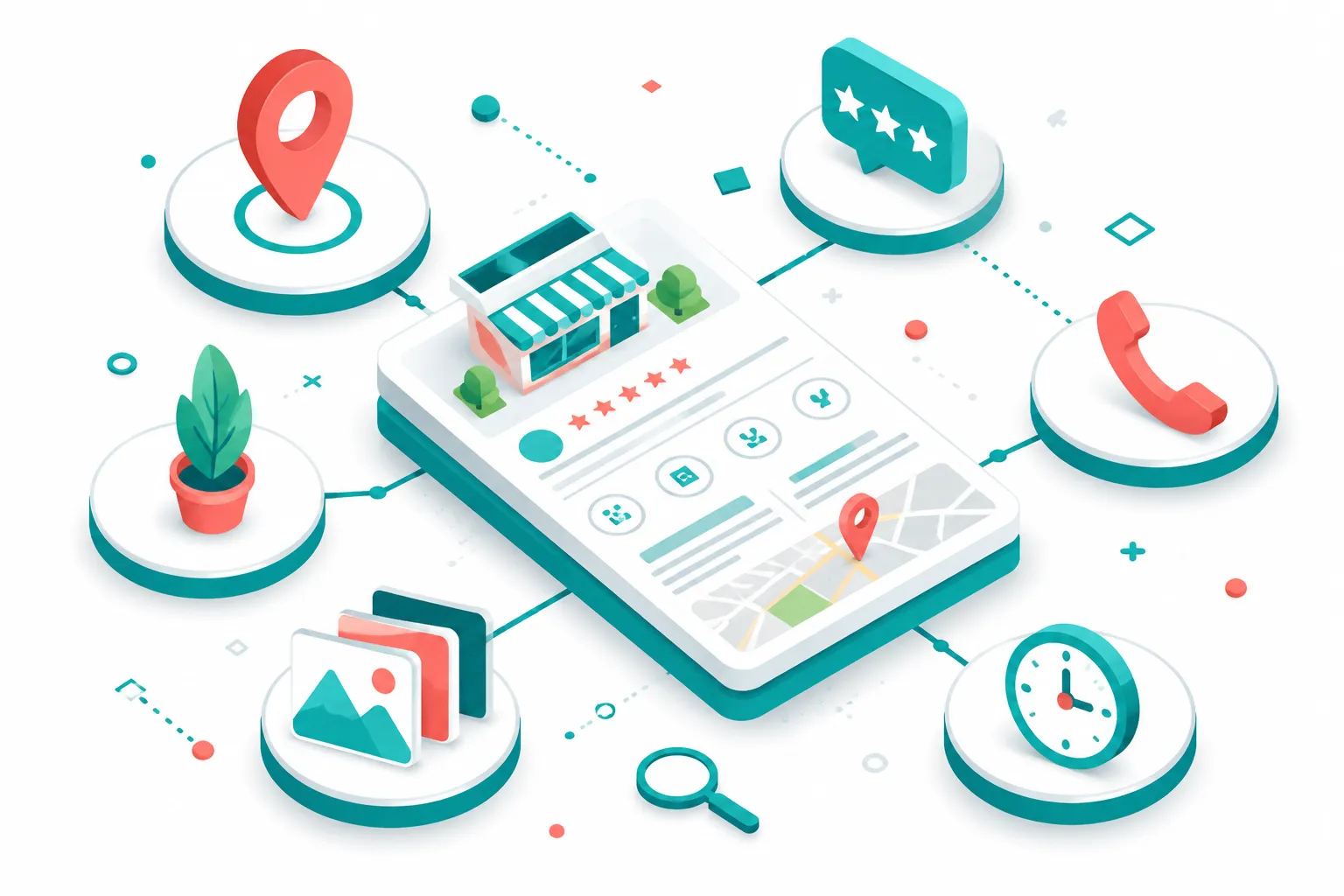
Complete every field in your Google Business Profile:
- Business name: Use your exact legal business name. Do not stuff keywords into it. This violates Google's guidelines and can result in suspension.
- Primary and secondary categories: Choose the most specific primary category available. Add secondary categories for every relevant service.
- Description: Write a 750-character description that naturally includes your primary local keywords and describes what makes your business different.
- Services and products: List every service with descriptions. This content feeds Google's understanding of your relevance.
- Business hours: Keep these accurate, including holiday hours. Incorrect hours are one of the most common reasons customers leave negative reviews.
- Photos: Upload high-quality real photos of your storefront, interior, team, and products. Monthly fresh photos on your Google Business Profile are a recommended ongoing activity.
- Google Posts: Publish at least one post per week. Posts can cover promotions, events, new services, or helpful tips.
- Messaging: Enable the messaging feature so customers can contact you directly from search results.
- Q&A: Seed your own questions and answers to pre-empt common queries.
The Google Business Profile is where the local map pack is won or lost. Treat it like a second website.
Step 2: Build NAP Consistency Across the Web
NAP stands for Name, Address, Phone number. Consistency in how these three pieces of information appear across every website, directory, and social platform is a foundational local SEO ranking factor. Even small discrepancies, like "St." versus "Street" or an old phone number on an outdated directory, can dilute your local search authority.
2026 local SEO checklists treat NAP consistency as non-negotiable, recommending that businesses audit for zero discrepancies across all platforms.
Where your NAP must be consistent:
- Your own website (footer on every page, contact page, and any location pages)
- Google Business Profile
- Yelp
- Apple Maps
- Bing Places
- Better Business Bureau
- Industry-specific directories relevant to your business type
- Local chamber of commerce listings
Best practices for NAP:
- Use a local phone number, not a toll-free number, to reinforce geographic relevance.
- Use standard postal address formatting consistently everywhere.
- Place your full NAP in the footer of your website so it appears on every page.
- Run a citation audit using a tool like BrightLocal or Whitespark to find and fix inconsistencies.
The business name address phone number combination is what search engines use to verify that all these mentions across the web refer to the same physical business. Inconsistency creates ambiguity. Ambiguity hurts rankings.
Step 3: Optimize Your Website for Local Keywords
Your website is the second pillar of local SEO, reinforcing everything your Google Business Profile signals. A website optimized for local keywords tells search engines exactly what you do and where you do it, which directly supports your local map pack rankings and organic local search results.
On-page local SEO checklist for your website:
- Title tags: Include your primary service and city in every page title. Example: "Plumbing Services in Denver, CO | [Business Name]."
- Meta descriptions: Write unique meta descriptions for each page that include local keywords naturally.
- H1 headings: Each page should have one H1 that includes the primary local keyword for that page.
- Body content: Weave city and neighborhood names naturally into page copy. Avoid keyword stuffing.
- Service pages: Create a dedicated page for each core service. Do not lump everything onto one page.
- Location pages: If you serve multiple cities or neighborhoods, create unique, substantive pages for each location. Do not duplicate content across them.
- LocalBusiness schema markup: Add structured data to help search engines understand your business type, location, hours, and contact information. Schema markup is a recommended technical task in 2026 local SEO checklists.
- Embedded Google Map: Embed a Google Map on your contact page showing your business location.
- Mobile performance: Test your site on mobile. Google uses mobile-first indexing, so a slow or poorly designed mobile experience directly hurts rankings.
- Page speed: Use Google PageSpeed Insights to identify and fix speed issues.
- Image alt text: Include local keywords in image alt text where it reads naturally.
Internal linking: Connect your service pages and location pages to each other. This distributes authority across your site and helps search engines understand the relationship between your services and the areas you serve.
Step 4: Create Local Content That National Competitors Cannot Replicate
Local content is one of the most powerful and underused local SEO strategies available to small businesses. National competitors can outspend you on links and technical SEO, but they cannot authentically write about your city's neighborhoods, local events, community organizations, or region-specific customer needs.
Creating locally relevant content is a core recommendation in 2026 local SEO guides because it builds topical authority for local keywords while also generating natural backlink opportunities from local websites.
Local content ideas that drive results:
- Local guides: "Best neighborhoods in [City] for [Your Service]" or "What to know about [local regulation] if you're a [City] homeowner."
- Community spotlights: Feature local events, partner businesses, or community organizations.
- FAQ pages: Answer the specific questions your local customers ask most often. Use Google Search Console to find real queries driving traffic to your site.
- Case studies: Document real results for local customers (with permission). These build trust and naturally include local place names.
- Seasonal content: Write about how your services apply during local weather patterns, seasonal events, or regional holidays.
This type of content serves a dual purpose: it ranks for local keywords and it gives other local websites a reason to link to you, which feeds directly into the next step.
Step 5: Build Local Backlinks
Backlinks from other websites remain one of the strongest ranking signals in both regular and local SEO. For local search specifically, links from other locally relevant websites carry extra weight because they reinforce your geographic authority.
2026 local SEO checklists recommend building at least three to five high-quality local backlinks as a starting benchmark, with ongoing link acquisition as a long-term strategy.
Where to get local backlinks:
- Local chamber of commerce: Join your local chamber and get listed in their member directory. Most chambers provide a followed link.
- Local sponsorships: Sponsor a local event, sports team, school program, or charity. Most organizers list sponsors with a link on their website.
- Community organizations: Partner with nonprofits, neighborhood associations, or community groups. A partnership success story on their website often includes a link.
- Local press: Reach out to local newspapers, blogs, and news sites with genuinely newsworthy stories about your business.
- Industry directories: Get listed in niche directories specific to your industry (e.g., Houzz for home services, Healthgrades for healthcare providers).
- Guest posts: Write helpful content for local business blogs or community websites.
A partnership success team approach, where you actively cultivate relationships with complementary local businesses for mutual referral and linking, is one of the most sustainable link-building strategies available to small businesses.
Step 6: Collect Reviews Systematically
Reviews are both a local ranking factor and the primary trust signal that converts searchers into customers. Review signals are among the top local ranking factors, with businesses crossing 10 or more reviews, maintaining a 4.0 to 4.5 or higher average rating, and generating consistent weekly review velocity seeing measurable ranking improvements.
The key word is "systematically." Businesses that ask for reviews only when they remember to get inconsistent results. Businesses that build a repeatable process get consistent results.
How to get more Google reviews:
- Ask at the moment of highest satisfaction, typically right after a successful service delivery or purchase.
- Send a follow-up email or text with a direct link to your Google Business Profile review page. Tools like Zyenere Reviews can automate this process.
- Train every customer-facing team member to ask for reviews as a standard part of the interaction.
- Make it easy: shorten your review link using Google's own link generator and put it on receipts, business cards, and email signatures.
- Respond to every review, positive and negative, within 24 to 48 hours. Response rate is itself a signal of business activity.
Handling negative reviews:
- Respond calmly and professionally. Acknowledge the issue without admitting fault where it is not warranted.
- Offer to resolve the issue offline. This demonstrates responsiveness to other readers.
- Never respond defensively or argue publicly.
Beyond Google, add your business to relevant review platforms like Yelp, Facebook, and industry-specific sites. Diversifying your review presence strengthens your overall local SEO profile.
Local SEO for Nonprofits: What Is Different
Nonprofits face a distinct set of local SEO challenges and opportunities. They often serve specific geographic communities, rely heavily on local trust and reputation, and compete for visibility against both for-profit businesses and other nonprofits. The good news is that many local SEO strategies apply directly, and some platforms offer additional advantages for nonprofits.

Key differences for nonprofit web design and local SEO:
- Google for Nonprofits: Eligible organizations can access Google for Nonprofits, which includes Google Ad Grants (up to $10,000 per month in free search ads) and enhanced Google Workspace features. This amplifies local search visibility significantly.
- Mission-driven content: Nonprofits can create deeply local content around community impact, volunteer stories, and program outcomes that resonates with local audiences and earns natural backlinks.
- Donor and volunteer search intent: People searching for nonprofits often use different queries than commercial searches. Optimize for terms like "volunteer opportunities in [City]" or "donate to [cause] in [City]."
- Small businesses nonprofits often share audiences: Partnerships between local small businesses and nonprofits can generate mutual backlinks, co-branded content, and shared community visibility.
- Signs your nonprofit has outgrown its website: If your site cannot support dedicated program pages, a blog for local content, or proper schema markup, it may be time for a rebuild rather than a patch. Nonprofit web design should prioritize local SEO from the ground up.
The core checklist (Google Business Profile, NAP consistency, local keywords, reviews, backlinks) applies to nonprofits just as it does to for-profit businesses. The difference is in how the content is framed and which platforms offer additional nonprofit-specific tools.
What to Track and When to Expect Results
Local SEO is not a one-time task. It is an ongoing activity that requires regular monitoring to understand what is working and where to invest more effort. Knowing what to track and when to expect results helps small businesses stay patient and strategic rather than abandoning efforts too early.
2026 local SEO checklists recommend monthly maintenance sessions to review performance, update content, and maintain the signals that drive rankings.
What to track:
- Local map pack rankings: Use a tool like BrightLocal or Local Falcon to track where you rank in the local map pack from different points within your service area. Rankings can vary block by block, so grid-based tracking gives a more accurate picture than a single-point check.
- Google Business Profile insights: Monitor search queries, profile views, direction requests, and call clicks directly in your Google Business Profile dashboard.
- Google Analytics: Track organic traffic to your website, especially to service pages and location pages. Google Analytics shows which pages are driving local traffic and conversions.
- Google Search Console: Monitor which local keywords are generating impressions and clicks. Identify pages that rank on page two and optimize them to break into page one.
- Review count and average rating: Track these monthly on Google, Yelp, and other platforms.
- Citation consistency: Run periodic audits to catch new inconsistencies before they compound.
When to expect results:
- 0 to 30 days: Google Business Profile optimizations can show impact relatively quickly, sometimes within weeks.
- 1 to 3 months: Citation building and on-page optimization begin to influence rankings.
- 3 to 6 months: Meaningful ranking improvements in the local map pack and organic local results typically become visible.
- 6 to 12 months: Compounding gains from content, backlinks, and review velocity become significant.
Patience is required, but the compounding nature of local SEO means that businesses who start early build a durable advantage over competitors who wait.
Common Local SEO Mistakes Small Businesses and Nonprofits Make
Most local SEO failures are not caused by complex technical problems. They are caused by a small set of preventable mistakes that are easy to fix once identified. Auditing for these issues is a standard recommendation in 2026 local SEO checklists.
The most common mistakes:
- Unclaimed or incomplete Google Business Profile: Leaving fields empty or not claiming the profile at all is the most costly mistake. A competitor with a complete profile will almost always outrank an incomplete one.
- Inconsistent NAP: A single old address on an outdated directory can confuse search engines and suppress rankings.
- Keyword stuffing the business name: Adding keywords like "Best Plumber Denver" to a business name listed as "Johnson Plumbing" violates Google's guidelines and risks suspension.
- No review strategy: Waiting for reviews to arrive organically results in slow accumulation and missed ranking opportunities.
- Duplicate location pages with thin content: Creating multiple pages for different cities but filling them with nearly identical content provides no ranking value and can trigger a duplicate content penalty.
- Ignoring mobile performance: A website that loads slowly or displays poorly on mobile loses both rankings and customers.
- No local link building: Relying entirely on on-page optimization without building any local backlinks leaves significant ranking potential unrealized.
- Checking rankings from a single location: Since local rankings vary by searcher location, checking from your own office gives a misleading picture of how customers in different parts of your service area see you.
- Setting and forgetting: Local SEO requires ongoing activity. A profile that was optimized 18 months ago and never touched since will lose ground to competitors who post regularly and generate fresh reviews.
What AI Cannot Do for Your Local Search Presence
AI tools have made many marketing tasks faster and cheaper, but local SEO has a core component that no AI can replicate: real-world trust signals. AI can help write content, suggest keywords, and draft review response templates, but it cannot generate authentic customer reviews, earn genuine local backlinks, or build a real relationship with your local community.
Emerging 2026 guidance on AI and local search emphasizes that businesses with strong, consistent local SEO signals are more likely to be recommended by AI answer engines, but those signals must be earned through real business activity, not manufactured.
What AI can help with:
- Drafting Google Posts and website content
- Suggesting local keyword variations
- Writing review response templates
- Identifying content gaps through competitor analysis
What AI cannot replace:
- Authentic customer reviews based on real experiences
- Local backlinks earned through genuine community relationships
- Accurate, real-time business information (hours, location, services)
- The human judgment required to respond appropriately to negative reviews
The practical takeaway: use AI tools to work more efficiently on local SEO tasks, but do not expect them to substitute for the real-world business activity that drives local trust signals.
Should You Hire a Local SEO Agency or Do It Yourself?
Small businesses can absolutely do meaningful local SEO themselves, especially in the early stages. The core tasks (claiming your Google Business Profile, building citations, optimizing your website, and asking for reviews) require time and consistency more than specialized expertise. Many free and low-cost tools make self-directed local SEO accessible.
That said, hiring a professional or agency makes sense in specific situations. If your market is highly competitive, if you are trying to rank across multiple locations, or if you simply do not have the time to maintain ongoing local SEO activity, professional help accelerates results significantly.
Choose DIY local SEO if:
- You are in a low-to-medium competition market.
- You have at least two to four hours per month to dedicate to local SEO maintenance.
- You are comfortable learning basic tools like Google Search Console and Google Analytics.
- Budget is a primary constraint.
Consider hiring help if:
- You are in a competitive market where top-ranking competitors have hundreds of reviews and strong backlink profiles.
- You are managing multiple locations.
- You have tried DIY local SEO for six months without meaningful results.
- You want to pursue white label SEO services through a partner agency to scale without building an in-house team.
What local SEO services typically cost:
Local SEO pricing varies widely. Basic local SEO services from a freelancer or small agency typically range from $300 to $1,000 per month. More comprehensive campaigns in competitive markets can run $1,500 to $5,000 per month or more. White label SEO arrangements allow agencies to resell local SEO services white label under their own brand, which can reduce costs for end clients in some cases. Always evaluate agencies by their track record with businesses similar to yours, not just their pricing.
Local SEO Tools You Actually Need to Get Started
The good news is that the most important local SEO tools are either free or very low cost. Small businesses do not need an expensive tech stack to execute a solid local SEO strategy.
Free tools that cover the essentials:
- Google Business Profile: Free. The most important tool in local SEO.
- Google Search Console: Free. Shows which keywords drive traffic to your site and flags technical issues.
- Google Analytics: Free. Tracks website traffic, user behavior, and conversions.
- Google PageSpeed Insights: Free. Identifies speed and mobile usability issues.
- Bing Places for Business: Free. Extends your local presence beyond Google.
Paid tools worth considering:
- BrightLocal: Starting around $39/month. Tracks local rankings, audits citations, and monitors reviews across platforms.
- Whitespark: Citation building and local rank tracking. Particularly strong for citation audits.
- Semrush: Broader SEO tool with local keyword research and competitor analysis capabilities.
- Local Falcon: Grid-based local rank tracking that shows how you rank across your entire service area.
For most small businesses just starting out, the free tools are sufficient to execute the full beginner checklist. Paid tools become valuable once the basics are in place and you need more granular data to optimize further.
FAQ: Local SEO for Small Business
How long does local SEO take to show results?
Most small businesses begin to see meaningful local SEO results within three to six months of consistent effort. Google Business Profile optimizations can show impact within weeks, while citation building and on-page changes typically take one to three months to influence rankings. Backlink-driven gains and content authority build over six to twelve months. The timeline depends on market competitiveness, starting baseline, and consistency of ongoing activity.
How many Google reviews do I need to rank in the local pack?
There is no fixed threshold, but data suggests that crossing 10 or more reviews with a 4.0 to 4.5 or higher average rating is a meaningful benchmark in most markets. In competitive categories, top-ranking businesses often have 50 to 200 or more reviews. Consistent weekly review velocity matters as much as total count because it signals ongoing business activity to Google.
Do I need a physical address to rank in local search?
A physical address is required to appear in the Google local map pack for a specific location. However, service-area businesses (like plumbers, cleaners, or mobile services) can hide their address and set a service area instead. This allows ranking in local search results across the service area without displaying a home address publicly. The trade-off is that service-area businesses typically rank less strongly at the center of their area compared to businesses with a verified storefront.
What is the single most important thing I can do for local SEO today?
Claim and fully complete your Google Business Profile. If it is already claimed, audit it against the complete checklist: accurate categories, keyword-rich description, full services list, current hours, high-quality photos, and at least one recent Google Post. Google Business Profile signals account for roughly 32% of local ranking influence, making it the highest-leverage single action available.
Can I do local SEO myself or do I need to hire someone?
Yes, small businesses can do effective local SEO themselves, especially in low-to-medium competition markets. The core tasks (Google Business Profile optimization, NAP consistency, basic on-page optimization, and review generation) require time and consistency rather than technical expertise. Free tools like Google Search Console and Google Analytics make self-directed local SEO accessible. Hiring a professional makes sense when the market is highly competitive, multiple locations are involved, or time is the primary constraint.
How much should SEO cost for a small business?
Local SEO services typically range from $300 to $1,000 per month for basic campaigns from a freelancer or small agency, and $1,500 to $5,000 or more per month for comprehensive campaigns in competitive markets. DIY local SEO using free tools costs nothing beyond time. One-time local SEO audits or setup packages are also available, typically ranging from $500 to $2,500 depending on scope. Always evaluate cost relative to the potential revenue from improved local rankings, not as an isolated expense.
Can I do local SEO myself?
Yes. The core local SEO checklist (claiming your Google Business Profile, building NAP consistency, optimizing your website for local keywords, generating reviews, and building a few local backlinks) is entirely achievable without hiring an agency. Free tools from Google cover most of the monitoring and technical needs. The main investment is time, typically two to four hours per month for ongoing maintenance once the initial setup is complete.
How much does local business SEO cost?
Local business SEO costs vary based on market competitiveness, scope of work, and whether you hire help or do it yourself. DIY local SEO is essentially free (just time). Professional local SEO services range from $300 to $1,000 per month for basic work to $5,000 or more per month for aggressive multi-location campaigns. Most small businesses in moderate-competition markets see strong results in the $500 to $1,500 per month range when working with a qualified local SEO provider.
Is SEO dead or evolving in 2026?
SEO is very much alive and evolving in 2026. The rise of AI Overviews and AI-powered search tools has changed how some informational queries are answered, but local search remains highly transactional and resistant to AI substitution. In fact, strong local SEO signals now feed both traditional Google rankings and AI recommendation engines like ChatGPT and Gemini. Businesses that maintain accurate, consistent, and authoritative local signals are better positioned than ever. SEO has shifted toward entity authority and trust signals, but the fundamentals of local SEO remain as effective as they have ever been.
Conclusion: Your Local SEO Action Plan
Local SEO for small business is not a single project. It is a set of compounding activities that build on each other over time. The businesses that win in local search are not necessarily the ones with the biggest budgets. They are the ones that execute the fundamentals consistently and keep improving.
Start here, in this order:
- Claim and fully complete your Google Business Profile today.
- Audit your NAP consistency across Google, Yelp, Facebook, Apple Maps, and Bing Places.
- Optimize your website's title tags, meta descriptions, and H1s for local keywords.
- Build a repeatable review request process and start using it immediately.
- Create at least one piece of genuinely local content per month.
- Pursue three to five local backlinks from chambers of commerce, sponsorships, or community organizations.
- Connect Google Search Console and Google Analytics to your website if you have not already.
- Set a monthly calendar reminder for a local SEO maintenance session.
None of these steps require a large budget. All of them require consistency. Small businesses and nonprofits that commit to this checklist and maintain it over six to twelve months will see compounding gains in local visibility, customer inquiries, and revenue that paid advertising simply cannot replicate at the same cost.
The local map pack is a finite resource. Every position your business earns is one a competitor does not have. Start building that advantage today.
References
[1] Local Seo Checklist Small Business 2026 – https://stoneampseo.com/local-seo-checklist-small-business-2026/
[2] Local Seo Checklist – https://www.zyenereviews.com/resources/local-seo-checklist
[3] Local Seo Checklist – https://localiq.com/blog/local-seo-checklist/
[4] 2026 Local Seo Checklist With A Free Downloadable Template – https://www.wd-strategies.com/articles/2026-local-seo-checklist-with-a-free-downloadable-template
[5] Seo Checklist Small Business – https://columbiavalleywebdesigns.com/blog/seo-checklist-small-business/
[6] Local Seo Ranking Factors – https://www.flento.io/blog/local-seo-ranking-factors
[7] Local Seo Checklist – https://daltonluka.com/blog/local-seo-checklist
[8] The Complete Local Seo Audit Checklist For 2026 – https://revved.digital/the-complete-local-seo-audit-checklist-for-2026/
[9] Local Seo Checklist For Small Businesses In 2026 – https://murrietamarketing.com/blog/local-seo-checklist-for-small-businesses-in-2026/
[10] Complete Guide Local Seo Small Business 2026 – https://www.hikeseo.co/post/complete-guide-local-seo-small-business-2026