

Quick Answer: Whether your small business website should sell products online depends on your product type, operational readiness, and customer expectations. For most service businesses, adding ecommerce directly to your website can increase revenue and reach, but only when you have the right platform, payment setup, and fulfillment process in place. This guide walks through every decision point so you can move forward with confidence.
Key Takeaways
- Adding ecommerce to an existing business website can open new revenue streams, but the decision requires honest assessment of your inventory, shipping capacity, and technical readiness.
- You do not need to choose between your own online store and marketplaces like Amazon, Etsy, or eBay, many successful small businesses sell on both.
- Platforms like Shopify, Shift4Shop, and Virto Commerce offer scalable ecommerce solutions for businesses at different stages.
- The cost to set up a basic ecommerce store ranges from free (using a marketplace) to several hundred dollars per month for a fully hosted platform.
- Selling online without inventory is possible through dropshipping, print-on-demand, and digital product models.
- Tax obligations, payment processor fees, and return policies must be established before you launch any online selling channel.
- Testing ecommerce on a marketplace before building your own online store is a proven, low-risk approach for beginners.
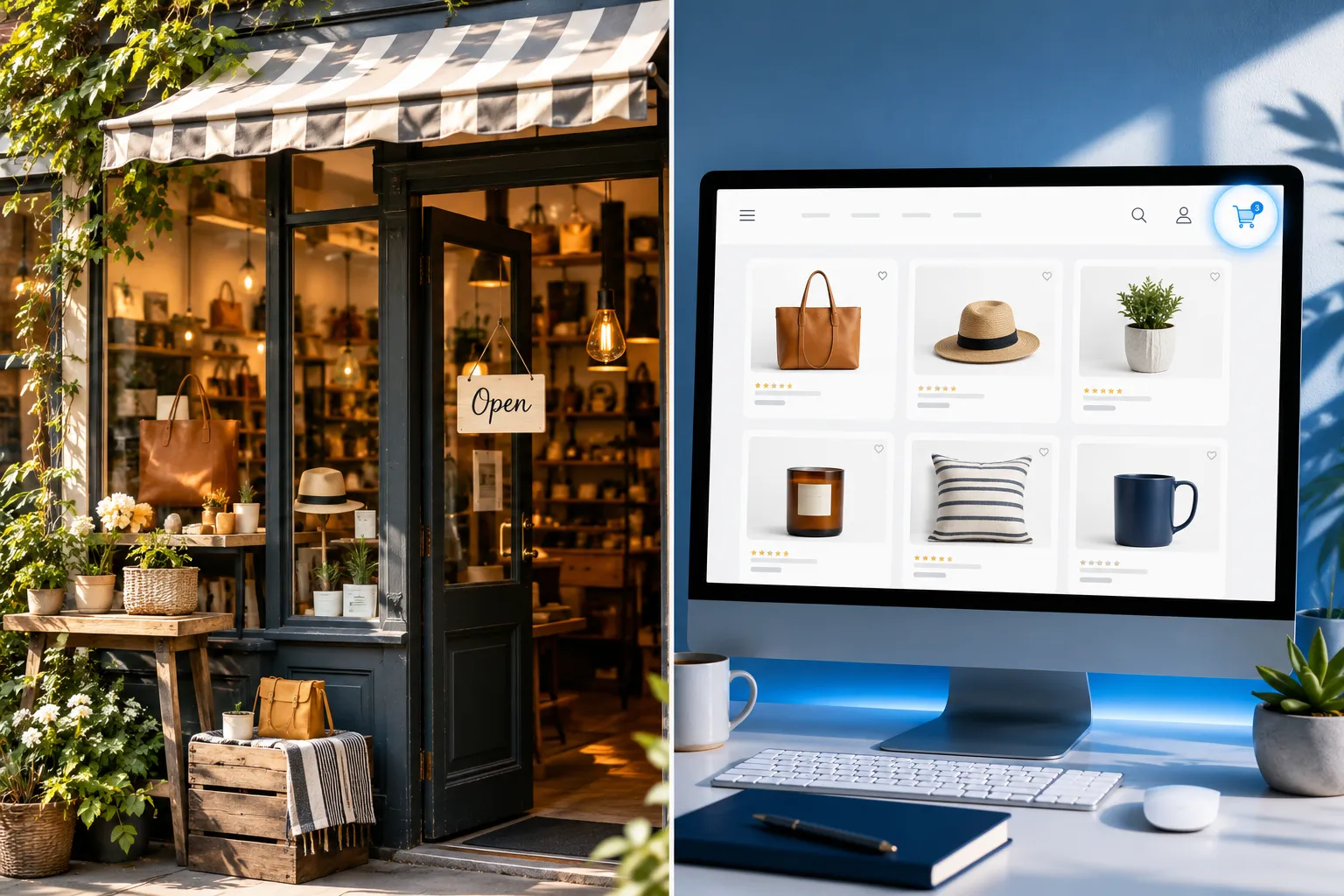
What Are the Benefits of Selling Products Directly on Your Website?
Selling products directly on your own website gives you full control over pricing, branding, and customer relationships, advantages that third-party marketplaces cannot offer. When you sell online through your own platform, every transaction builds your own customer database rather than someone else's.
Here are the core benefits that make direct ecommerce worth considering for small businesses:
You keep more revenue. Marketplaces like Amazon charge referral fees ranging from 6% to 45% depending on category, and eBay takes up to 13.25% in final value fees. When you sell on your own website, you pay only payment processing fees, typically 2.9% plus $0.30 per transaction with processors like Stripe or PayPal.
You own the customer relationship. On Amazon or Etsy, the marketplace owns the buyer data. On your own online store, you collect email addresses, purchase history, and behavioral data that fuel repeat sales and loyalty programs.
Brand consistency. Your website lets you present products exactly how you want, with your colors, story, and voice. Marketplaces force you into their templates.
No algorithm dependency. Ranking on Amazon or Etsy requires constant optimization and paid ads. Your own website, with solid search engine optimization, can generate organic traffic that compounds over time.
Flexibility in what you sell. Some products are restricted or banned on major marketplaces. Your own ecommerce site gives you more freedom, especially for categories like vape and CBD products, supplements, or alcohol.
The tradeoff: you are responsible for driving all traffic yourself. That is why many small businesses start on a marketplace to validate demand, then build their own online store once they have proven products and a customer base.
How to Sell Online: Getting Started in 7 Clear Steps
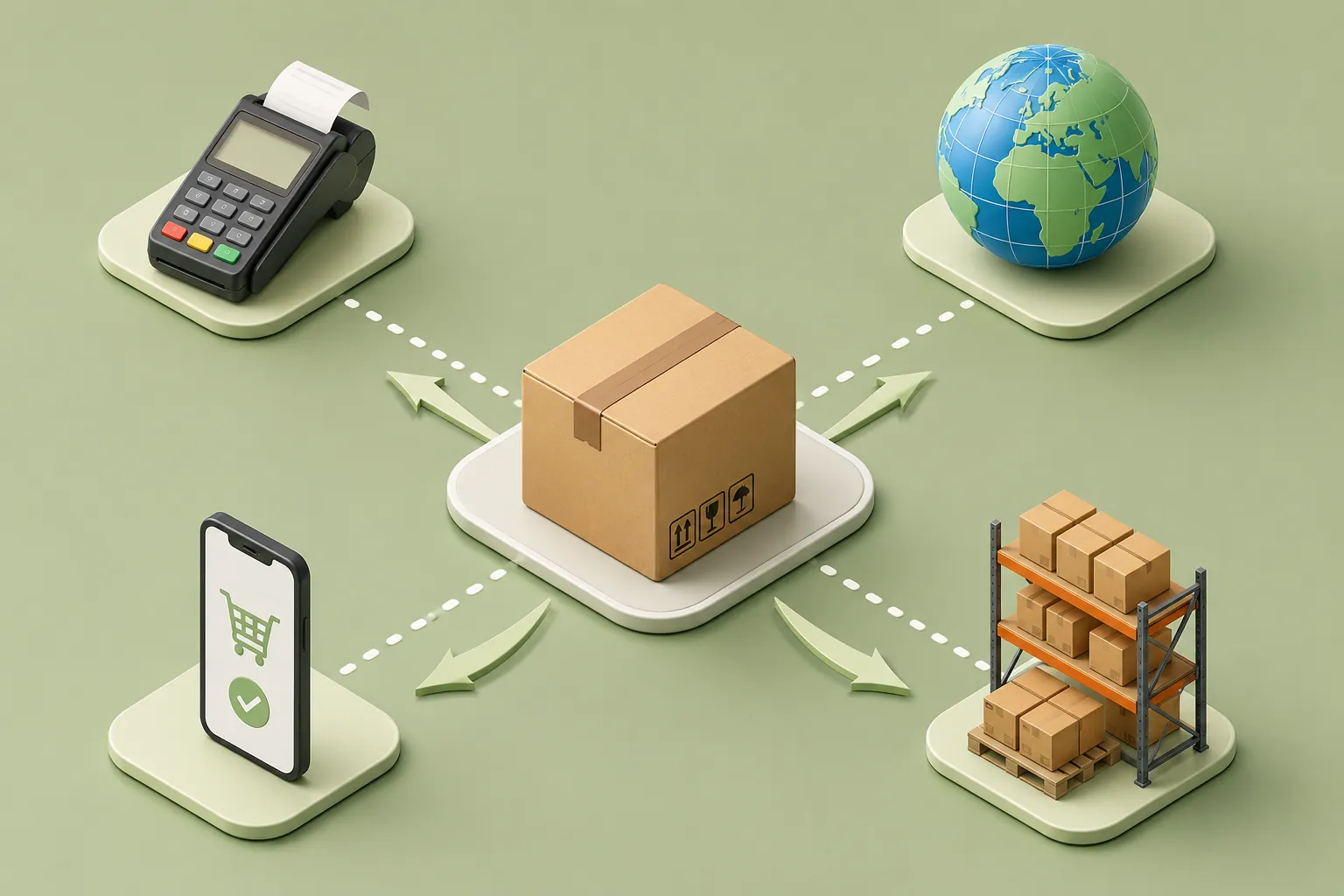
The fastest path to selling online starts with picking what to sell, then choosing where and how to sell it. Most small businesses can launch a functional ecommerce presence in under two weeks by following these seven steps.
Step 1: Choose What Products to Sell
Before you build anything, confirm there is real demand for what you want to sell online. Use Google Trends to check search volume, browse Amazon best sellers for category insights, and look at what competitors sell on Etsy Etsy or eBay. Strong product categories for small business websites in 2026 include fashion and apparel, jewelry, auto parts, supplements, and digital downloads.
Ask these questions before committing:
- Can this product be shipped safely and affordably?
- Is the margin high enough to cover platform fees, shipping, and returns?
- Is there repeat purchase potential, or is it a one-time buy?
Step 2: Pick the Right Domain Name
Your domain name is your storefront address online. Choose a domain that is short, memorable, and matches your business name or primary product category. Use a registrar like Namecheap or Google Domains to check availability. A .com extension remains the most trusted choice for ecommerce sites, though .shop and .store extensions are gaining acceptance.
Avoid hyphens, numbers, and names that are easy to misspell. The right domain name also helps with search engine optimization, including your main product keyword in the domain can provide a modest ranking signal.
Step 3: Build Your Online Store
Choose a platform that matches your technical skill and budget. Options range from fully hosted solutions to open-source platforms:
| Platform | Best For | Starting Cost |
|---|---|---|
| Shopify | General ecommerce, beginners | $39/month |
| Shift4Shop | Free plan with US payment processing | Free (with Shift4 payments) |
| WooCommerce | WordPress users | Free plugin + hosting |
| Virto Commerce | B2B ecommerce, enterprise | Custom pricing |
| BigCommerce | Scaling businesses | $39/month |
| Etsy | Handmade, vintage, crafts | $0.20/listing |
Shift4Shop offers a genuinely free plan for US merchants who use Shift4 as their payment processor, making it one of the most accessible ecommerce solutions for businesses just starting out. Virto Commerce is built for B2B ecommerce scenarios where complex pricing, bulk ordering, and custom catalogs are needed.
Whether you use Shopify, Shift4Shop, or another platform, ensure the shopping cart software supports mobile checkout, over 60% of ecommerce traffic now comes from mobile devices.
Step 4: Get Payments Into Your Bank Account
Setting up payment processing is non-negotiable before you sell a single product. The most widely used payment processors for small business websites are:
- Stripe, developer-friendly, supports 135+ currencies
- PayPal, trusted by customers, easy to set up
- Square, excellent for businesses that also sell in person
- Shift4 Payments, integrated with Shift4Shop at no extra platform cost
Most platforms integrate these processors natively. Ensure your checkout is PCI-compliant and that you display accepted payment methods clearly on your product pages. Customers need to see familiar logos to feel confident completing a purchase.
Step 5: Select Your Shipping Methods
Shipping is where many new ecommerce businesses lose money. Before you launch, calculate your true shipping cost for each product, including packaging materials, carrier fees, and the time to pack and drop off orders.
Options for small business shipping:
- USPS, best for lightweight packages under 1 lb
- UPS, competitive for heavier shipments
- FedEx, reliable for time-sensitive orders
- ShipStation, multi-carrier management platform that discounts rates
Decide upfront whether you will offer free shipping (built into product price), flat-rate shipping, or real-time carrier rates. Free shipping is a powerful conversion driver, according to the National Retail Federation, 75% of consumers expect free shipping on orders over a certain threshold.
Step 6: Promote and Market Your Online Store
Traffic does not appear automatically when you build an online store. You need a promotion plan from day one. The most effective channels for small business ecommerce in 2026 include:
- Search engine optimization (SEO): Optimize product pages with descriptive titles, alt text on images, and keyword-rich descriptions. Use Google Search Console to monitor performance.
- Facebook and Instagram: Create a Facebook business page and connect your product catalog to run dynamic ads. Instagram Shopping lets you tag products directly in posts and stories.
- Pinterest: Pinterest is a powerful discovery platform for visual products. Pin product images with links back to your store. Pinterest users actively search for products to buy, making it a high-intent channel.
- Email marketing: Build a list from day one using a tool like Mailchimp or Klaviyo.
- Google Shopping ads: Google's Shopping tab displays your products to users actively searching for them.
Step 7: Grow Your Business
Once your first sales come in, focus on improving conversion rate, average order value, and repeat purchase rate. These three metrics drive sustainable ecommerce growth more reliably than chasing new traffic alone. Use analytics from your platform and Google Analytics 4 to identify where customers drop off and what products sell best.
Should My Website Sell Products Online or Use a Marketplace Instead?
For most small businesses, the best answer is both, but in a specific sequence. Start on a marketplace to validate your products, then build your own online store once you have consistent sales and customer data.
Here is how the two options compare:
Your own website:
- Full brand control and customer ownership
- Higher setup effort and ongoing marketing responsibility
- Better long-term margins once traffic is established
- Requires you to handle all customer service, returns, and disputes
Marketplaces (Amazon, Etsy, eBay, Facebook Marketplace):
- Built-in traffic and buyer trust from day one
- Fees reduce margins significantly
- Limited customization and no customer data ownership
- Easier to start selling online immediately
The hybrid approach is what most successful small businesses use. Sell on Etsy Etsy or Amazon Amazon to generate cash flow while building your own online store in parallel. Over time, shift marketing investment toward your own website as your SEO and email list grow.
Craigslist and Facebook Marketplace are worth mentioning for local, low-volume sellers who want zero platform fees and immediate local reach. Even these free channels can generate meaningful sales for certain product types, particularly used goods, furniture, and locally made items.
How Much Does It Cost to Set Up Ecommerce on a Small Business Website?
Setting up ecommerce on a small business website can cost anywhere from $0 to over $500 per month, depending on the platform, features, and transaction volume. Here is a realistic cost breakdown for three common scenarios.
Scenario 1: Free start (marketplace or Shift4Shop free plan)
- Platform: $0 (Etsy, eBay, Facebook Marketplace, or Shift4Shop with Shift4 payments)
- Domain: $12-15/year
- Payment processing: 2.9% + $0.30 per transaction
- Estimated monthly cost for 20 orders: under $20
Scenario 2: Entry-level hosted store (Shopify Basic or WooCommerce)
- Platform: $39/month (Shopify) or ~$10-15/month hosting (WooCommerce)
- Domain: $12-15/year
- Payment processing: 2.9% + $0.30 per transaction
- Apps/plugins: $0-50/month
- Estimated monthly cost: $50-100 before transaction fees
Scenario 3: Growing business with advanced features
- Platform: $105-500/month (Shopify Advanced, BigCommerce Pro, or Virto Commerce)
- Payment processing: negotiated rates at higher volume
- Marketing tools, shipping software, and integrations: $100-300/month
- Estimated monthly cost: $200-800+
For B2B ecommerce scenarios, Virto Commerce offers a headless ecommerce solution that scales with complex catalog and pricing needs, though it requires more technical implementation than out-of-the-box platforms.
The key cost most new sellers underestimate is marketing. Getting traffic to a new online store typically requires either paid advertising (budget $200-500/month to start) or significant SEO investment over 6-12 months before organic traffic becomes meaningful.
What Are the Risks of Selling Products Online as a Small Business?
Selling online carries real risks that can hurt a small business if not addressed upfront. The most common risks are financial, operational, and reputational.
Financial risks:
- Chargeback fraud, where customers dispute legitimate charges, costs US merchants an estimated $125 billion annually
- Underpricing products once shipping, fees, and returns are factored in
- Overstocking inventory that does not sell
Operational risks:
- Shipping delays and carrier errors that damage customer experience
- Inventory management errors leading to overselling
- Platform outages or policy changes on marketplaces like Amazon or Etsy
Reputational risks:
- Negative reviews on Google, Amazon, or Etsy that are difficult to remove
- Poor product photography or descriptions that attract the wrong buyers
- Slow customer service response times that escalate into public complaints
Legal and compliance risks:
- Selling regulated products (supplements, CBD, alcohol) without proper licensing
- Failing to collect and remit sales tax across multiple states
- Privacy policy and GDPR compliance gaps if you sell to European customers
The good news: most of these risks are manageable with proper planning. Excellent customer service, clear return policies, and accurate product listings resolve the majority of disputes before they escalate.
How Do I Know If My Business Is Ready to Sell Online?
A business is ready to sell online when it has a defined product, a reliable way to fulfill orders, and a basic understanding of its target customer. You do not need a perfect setup to start, but you do need these foundations in place.
Use this readiness checklist:
- You have at least 5-10 products ready to list with photos and descriptions
- You can ship an order within 3-5 business days consistently
- You have a payment processor account approved and tested
- Your return and refund policy is written and posted
- You have a customer service email or phone number active
- Your product pricing covers cost of goods, shipping, platform fees, and a margin
If you cannot check all of these boxes, identify which gaps to close first before launching. Selling online before you are operationally ready leads to negative reviews and refund requests that can permanently damage your reputation on marketplaces.
Edge case: If you sell services rather than physical products, you may be able to sell online immediately by offering digital products, gift cards, or service packages as ecommerce items. A massage therapist can sell gift certificates online. A consultant can sell a downloadable guide. These low-fulfillment products let service businesses test ecommerce without inventory or shipping complexity.
What Products Sell Best on Small Business Websites?
The products that sell best on small business websites are those with high perceived value, manageable shipping dimensions, and strong visual appeal. Categories with proven demand include fashion and apparel, jewelry, home decor, auto parts, supplements, and digital products.
Here is a closer look at top-performing categories:
Fashion and Apparel
Fashion is one of the largest ecommerce categories globally. Statista projects global apparel ecommerce revenue to reach $1.2 trillion by 2027. Small businesses can compete by focusing on a niche, plus-size activewear, sustainable basics, or locally made garments, rather than trying to compete with mass-market retailers.
T-Shirts
Custom t-shirts are among the easiest products to sell online without inventory, using print-on-demand services like Printful or Printify. Margins are lower than bulk manufacturing, but the zero-inventory model eliminates financial risk entirely.
Jewelry
Jewelry has excellent margin potential and ships cheaply. Platforms like Etsy are particularly strong for handmade and artisan jewelry, with Etsy reporting 96.5 million active buyers in 2023. Pinterest is also a high-converting channel for jewelry discovery.
Vape and CBD Products
Vape and CBD products sell well online but require careful compliance work. Payment processors have restrictions on these categories, and advertising on Facebook and Google is limited. Dedicated platforms and age-verification tools are essential before you sell these products online.
Auto Parts
Auto parts are a high-demand, high-average-order-value category. eBay Motors is the dominant marketplace for auto parts, with millions of active listings. Selling auto parts on your own website works well when paired with a fitment guide that helps customers confirm compatibility before purchasing.
Wine and Alcoholic Beverages
Selling wine and alcoholic beverages online requires state-specific licensing and compliance with direct-to-consumer shipping laws that vary by state. However, the market is substantial, US ecommerce alcohol sales reached $8.3 billion in 2023 according to IWSR. Ensure you use an age-verification solution and work with a compliance attorney before launching.
Supplements Online
Supplements are a high-growth category, but FTC and FDA regulations require careful attention to health claims. Avoid making disease treatment claims, use compliant labeling, and work with a supplier who provides certificates of analysis for each batch.
More Product Ideas to Sell Online
Beyond the categories above, strong opportunities exist in:
- Digital downloads (templates, courses, stock photos, music)
- Pet accessories
- Home office supplies online
- Craft and hobby supplies
- Personalized gifts
- Outdoor and camping gear
The best products to sell online share common traits: they solve a specific problem, photograph well, and have a customer base that actively searches for them online.
Can I Start Selling Online Without Inventory?
Yes, several proven business models let you sell online without holding any physical inventory. Dropshipping, print-on-demand, and digital products are the three most accessible options for small businesses.
Dropshipping: You list products on your website, and when a customer places an order, your supplier ships directly to them. You never touch the product. Platforms like Oberlo (now integrated into Shopify) and Spocket connect you with suppliers. Margins are lower (typically 15-30%), but startup costs are minimal.
Print-on-demand: Services like Printful and Printify produce custom-printed products (t-shirts, mugs, phone cases) only when an order is placed. No upfront inventory investment, no waste. This model works well for branded merchandise and niche apparel.
Digital products: Ebooks, courses, templates, presets, and software can be sold online with zero inventory and zero shipping cost. Platforms like Gumroad or Teachable make it straightforward to sell digital products even without a full ecommerce website.
Affiliate selling: You promote other companies' products and earn a commission on each sale. No inventory, no fulfillment, no customer service for the product itself. This is not technically selling your own products, but it is a legitimate way to monetize a website audience.
For beginners selling products online from home, dropshipping or print-on-demand is the lowest-risk entry point. Start with a small catalog, test which products sell, and reinvest profits before scaling.
What Payment Processors Work Best for Small Business Websites?
The best payment processors for small business websites are Stripe, PayPal, and Square, each with different strengths depending on your sales volume, product type, and whether you also sell in person.
Stripe is the top choice for businesses that want developer flexibility and international selling capabilities. It supports 135+ currencies and has transparent pricing with no monthly fees on its standard plan.
PayPal remains the most recognized payment brand among online shoppers. PayPal has over 435 million active accounts globally, which means many customers already have a PayPal account and can check out quickly. However, PayPal's dispute resolution process can favor buyers, creating chargeback risk for sellers.
Square excels for businesses that sell both online and in physical locations. Its unified dashboard tracks inventory and sales across both channels, making it ideal for retailers, food businesses, and service providers who also sell products.
Shift4 Payments is deeply integrated with Shift4Shop, making it the natural choice if you build your online store on that platform. Using Shift4 as your processor unlocks the free Shift4Shop plan, which is a genuine ecommerce solution with no monthly platform fee.
For businesses selling supplements, CBD, vape products, or firearms accessories, standard processors may decline your application. In those cases, look at high-risk payment processors like PaymentCloud or Durango Merchant Services.
Is It Better to Sell on My Website or on Amazon and Etsy?
Selling on your own website gives you better long-term margins and customer ownership, while selling on Amazon and Etsy gives you immediate access to millions of buyers. The right answer depends on where you are in your business journey.
Choose Amazon if:
- You have products in competitive, high-volume categories
- You can meet Amazon's fulfillment and performance standards
- You want access to Amazon Prime customers
- You are willing to invest in Amazon PPC advertising
Amazon Amazon is the largest product search engine in the US. According to Jungle Scout's 2024 State of the Amazon Seller report, 89% of sellers are profitable on the platform. However, Amazon's fees, policy changes, and competition from Amazon's own private label products create real risk for small sellers.
Choose Etsy Etsy if:
- You sell handmade, vintage, or craft supplies
- Your products have a story and visual appeal
- You want a marketplace with lower competition than Amazon
- You are just starting to sell online and want built-in traffic
Choose your own website if:
- You have an existing audience or email list
- You sell products that are restricted on major marketplaces
- You want to build a brand rather than just move units
- You are ready to invest in SEO and paid advertising
The practical recommendation for most small businesses: Start on Etsy or eBay to validate products and generate cash flow. Simultaneously build your own online store on Shopify or Shift4Shop. Over 12-24 months, shift your marketing investment toward your own website as your SEO rankings and email list grow. This approach lets you sell online immediately while building an asset you own.
How Much Traffic Do I Need Before Selling Products on My Website?
You do not need significant traffic before adding ecommerce to your website, but you do need a plan to generate traffic once you launch. Many businesses make the mistake of building a full online store and then waiting for customers who never arrive.
A realistic benchmark: a new ecommerce website with no existing audience typically converts at 1-2% of visitors into buyers. That means 100 visitors might generate 1-2 sales. To generate 10 sales per week, you need roughly 500-1,000 weekly visitors from targeted sources.
If your website already gets 500+ monthly visitors from organic search or social media, adding ecommerce is worth testing immediately. If you get fewer than 100 monthly visitors, focus on traffic generation first, through SEO, social media, or paid ads, before investing heavily in ecommerce infrastructure.
However: If you plan to sell on Amazon, Etsy, or Facebook Marketplace alongside your own website, you can start selling online immediately regardless of your website traffic. Marketplace traffic is built in. Use marketplace sales to fund your website marketing efforts.
What About Taxes and Legal Requirements When Selling Online?
Every business that sells products online must collect and remit sales tax in states where it has economic nexus, handle product liability, and comply with consumer protection laws. This is non-negotiable and cannot be deferred until you are "bigger."
Sales tax: The 2018 Supreme Court ruling in South Dakota v. Wayfair established that states can require online sellers to collect sales tax even without a physical presence. Most states now have economic nexus thresholds (typically $100,000 in sales or 200 transactions annually). Use TaxJar or Avalara to automate sales tax calculation and filing.
Business structure: Selling products online as a sole proprietor exposes your personal assets to liability. Consider forming an LLC before you launch. Costs vary by state but typically run $50-500 in filing fees.
Privacy policy and terms of service: If you collect customer data (which any ecommerce site does), you need a privacy policy. If you sell to EU customers, GDPR compliance is required. Use a generator like Termly or consult an attorney.
Product liability: If a customer is injured by a product you sell, you can be held liable even if you did not manufacture it. Product liability insurance is available through providers like Next Insurance for as little as $25-50/month.
Regulated products: Supplements, CBD, alcohol, vape products, and firearms accessories each carry specific federal and state regulations. Research your category thoroughly before you sell online, the consequences of non-compliance can include fines, account suspension, and legal action.
Can I Test Selling Products Before Fully Committing to Ecommerce?
Yes, and testing before committing is the smartest approach for any small business considering ecommerce. Several low-cost methods let you validate demand and operations before investing in a full online store.
Method 1: Sell on Facebook Marketplace or Craigslist. These free platforms let you list products immediately with no setup cost. Even a few successful local sales confirm that real people want what you are selling.
Method 2: Open an Etsy shop. Etsy charges only $0.20 per listing and a 6.5% transaction fee. You can have a functioning online store live within hours. If your products sell on Etsy, they will likely sell on your own website too.
Method 3: Use a "buy now" button on your existing website. Both PayPal and Stripe offer embeddable buy buttons that let you accept payments on any website without a full ecommerce platform. This is the fastest way to test whether your existing website audience will buy from you.
Method 4: Run a pre-order campaign. List a product for sale before you have inventory. If enough customers buy, fulfill the order. If not, refund them. This approach validates demand with zero inventory risk.
Method 5: Sell at a local market or pop-up first. In-person selling gives you direct customer feedback on pricing, packaging, and product appeal before you invest in online infrastructure.
The goal of testing is to answer one question: will real customers pay real money for this product at this price? Once you have evidence that they will, investing in a proper ecommerce platform and marketing becomes much lower risk.
Where Can You Sell Products Online? A Platform-by-Platform Guide
There is no single best place to sell products online, the right channel depends on your product type, target customer, and business model. Here is a practical breakdown of the major options.
Sell on Amazon
Amazon is the dominant ecommerce marketplace in the US, with over 300 million active customer accounts. Selling on Amazon gives you access to that audience immediately, but competition is intense and fees are substantial. Amazon's Fulfillment by Amazon (FBA) program handles storage, packing, and shipping for a fee, making it possible to run a significant ecommerce business without a warehouse.
Sell on eBay
eBay remains one of the most versatile online marketplaces, particularly strong for used goods, collectibles, auto parts, and niche products. eBay had 132 million active buyers as of Q4 2023. Unlike Amazon, eBay allows auction-style listings, which can drive prices higher for rare or in-demand items.
Sell on Etsy
Etsy Etsy is the leading marketplace for handmade, vintage, and craft supply sellers. If your products fit those categories, Etsy's built-in audience of buyers specifically looking for unique, artisan goods makes it the most efficient place to start selling online. Etsy also offers Etsy Ads to boost visibility within the platform.
Sell on Facebook
Facebook offers two distinct selling channels: Facebook Marketplace for local and peer-to-peer sales, and Facebook Shops for businesses that want a full storefront integrated with their Facebook business page. Facebook Shops can sync with Shopify or WooCommerce catalogs, making it straightforward to manage inventory across channels.
Sell on Instagram
Instagram Shopping lets businesses tag products in posts, stories, and reels, driving users directly to a product page. This is particularly effective for fashion, jewelry, beauty, and home decor, categories where visual discovery drives purchase intent. You need a Facebook business page and a connected product catalog to enable Instagram Shopping.
Sell on Pinterest
Pinterest is an underused sales channel for small businesses. Users on Pinterest actively search for products and ideas, making it a high-intent discovery platform. Pinterest has over 500 million monthly active users, and Product Pins connect directly to your online store. Pin product images consistently to build organic reach over time.
Sell on Google
Google Shopping displays your products in Google search results when users search for items you sell. Setting up a Google Merchant Center account and submitting a product feed is free. You can then run paid Google Shopping ads or rely on free organic product listings that Google has expanded in recent years.
Common Mistakes Small Businesses Make When Selling Online
The most costly mistakes in ecommerce are not technical, they are strategic. Small businesses most often fail online because of poor product photography, unclear pricing, and inadequate customer service, not because they chose the wrong platform.
Mistake 1: Launching without product photos. Product images are the single biggest driver of online purchase decisions. Blurry, poorly lit, or inconsistent photos kill conversion rates. Invest in basic photography equipment or hire a product photographer before you launch.
Mistake 2: Ignoring mobile checkout. If your online store does not work smoothly on a smartphone, you are losing more than half your potential customers. Test your entire checkout process on multiple mobile devices before launch.
Mistake 3: Underestimating shipping costs. Many new sellers price products without fully accounting for packaging, carrier fees, and the labor cost of packing orders. Run the full math before you publish prices.
Mistake 4: No email list from day one. Your email list is the most valuable asset in ecommerce, more reliable than social media reach and cheaper than paid ads. Set up an email capture form and a welcome sequence before your first sale.
Mistake 5: Trying to sell everything. A focused product catalog converts better than a sprawling one. Start with your 5-10 best products and expand once you understand what your customers actually buy.
Mistake 6: Ignoring SEO on product pages. Product pages need descriptive titles, keyword-rich descriptions, and proper image alt text to rank in search results. Generic manufacturer descriptions copied from a supplier catalog will not rank and will not convert.
Mistake 7: No clear return policy. Customers are more likely to buy when they know returns are easy. A clear, fair return policy reduces purchase anxiety and actually increases conversion rates.
Checklist for Selling Online: Are You Ready to Launch?
Use this checklist to confirm you have covered the essentials before going live with your online store:
Products and inventory:
- Products selected with validated demand
- Professional product photos taken
- Accurate product descriptions written with keywords
- Pricing calculated to cover all costs and margin
Website and platform:
- Ecommerce platform chosen and set up (Shopify, Shift4Shop, WooCommerce, etc.)
- Right domain name registered and connected
- SSL certificate active (https://)
- Mobile checkout tested and functional
Payments and legal:
- Payment processor account approved
- Sales tax collection configured
- Privacy policy and terms of service posted
- Return and refund policy published
- Business entity formed (LLC recommended)
Shipping and fulfillment:
- Shipping carriers selected and accounts created
- Packaging materials sourced
- Fulfillment process documented and tested
- Shipping rates configured in your store
Marketing:
- Google Analytics 4 installed
- Google Search Console verified
- Facebook business page created
- Email marketing tool set up with welcome sequence
- At least one traffic source identified and active
FAQ: Frequently Asked Questions About Selling Products Online
Is it worth it to sell items online?
Yes, selling items online is worth it for most small businesses when approached with realistic expectations. The global ecommerce market exceeded $5.8 trillion in 2023 and continues to grow. Online selling expands your geographic reach, operates 24/7 without staff, and can generate passive income once established. The key is choosing the right products, platform, and marketing strategy for your specific situation.
What are the five golden rules of a website?
The five golden rules of a website are: (1) load fast, pages should load in under 3 seconds; (2) be mobile-friendly, over 60% of web traffic is mobile; (3) make navigation intuitive, users should find what they need in three clicks or fewer; (4) build trust with clear contact information, reviews, and security badges; and (5) have a clear call to action on every page so visitors know exactly what to do next.
What is the 80 20 rule in ecommerce?
The 80/20 rule in ecommerce states that roughly 80% of your revenue comes from 20% of your products or customers. In practice, this means a small number of best-selling products drive the majority of your sales, and a small group of loyal repeat customers generates most of your revenue. Smart ecommerce businesses identify that top 20% and focus marketing, inventory, and customer service resources on those high-value products and customers first.
Is ecommerce still worth it in 2026?
Ecommerce is absolutely worth pursuing in 2026. Global ecommerce sales are projected to account for over 22% of total retail sales worldwide by 2026, up from around 15% in 2020. Competition has increased, but so has consumer comfort with online shopping across all age groups. Small businesses that focus on niche products, excellent customer service, and strong brand identity can build profitable ecommerce operations even in competitive markets.
Conclusion: Should My Website Sell Products Online?
The answer for most small businesses is yes, but the path matters more than the destination. Selling online is not a single decision; it is a series of decisions about which products to sell, where to sell them, and how to reach the right customers.
Start with the lowest-risk option available to you. If you have never sold online before, list a few products on Etsy, eBay, or Facebook Marketplace this week. No platform fees, no complex setup, no risk. If those products sell, you have validated your concept and can invest in building your own online store with confidence.
When you are ready to build your own ecommerce website, choose a platform that matches your current stage. Shift4Shop offers a genuinely free ecommerce solution for US businesses. Shopify is the most beginner-friendly paid platform. Virto Commerce serves businesses with complex B2B ecommerce needs. WooCommerce is the right choice if you already run a WordPress website.
Actionable next steps:
- List one product on Etsy or eBay this week to test demand with zero setup cost.
- Register your domain name now, good names disappear fast.
- Open a Stripe or PayPal business account so you are ready to accept payments.
- Set up a free Google Merchant Center account to get your products appearing in Google Shopping results.
- Install Google Analytics 4 on your existing website to understand your current traffic before adding ecommerce.
- Write your return policy and privacy policy before your first sale, not after.
The businesses that succeed at selling online are not the ones with the most sophisticated technology, they are the ones that start, learn from real customers, and improve consistently. The best time to begin was last year. The second-best time is now.
References
- Amazon Seller Fees, Amazon, 2024
- eBay Selling Fees, eBay, 2024
- Stripe Pricing, Stripe, 2024
- Google SEO Starter Guide, Google, 2024
- Mobile Traffic Share, Statista, 2024
- Global Apparel Ecommerce Revenue, Statista, 2024
- Etsy Active Buyers 2023, Etsy Investor Relations, 2024
- US Ecommerce Alcohol Sales, IWSR, 2023
- Chargeback Statistics, Chargebacks911, 2024
- Ecommerce Conversion Rate Benchmarks, BigCommerce, 2023
- South Dakota v. Wayfair Supreme Court Opinion, Supreme Court of the United States, 2018
- Amazon Active Customer Accounts, Statista, 2024
- eBay Active Buyers Q4 2023, Statista, 2024
- Pinterest Monthly Active Users, Pinterest Newsroom, 2024
- Global Ecommerce Sales, Statista, 2024
- Ecommerce Share of Retail Sales, Statista, 2024
- Jungle Scout Amazon Seller Report, Jungle Scout, 2024
- PayPal Active Accounts, PayPal Investor Relations, 2024
- NRF Consumer View on Shipping, National Retail Federation, 2023
- Shift4Shop Pricing, Shift4Shop, 2024
- Shopify Pricing, Shopify, 2024
- Google Merchant Center, Google, 2024
- Printful Dropshipping, Printful, 2024
- TaxJar Sales Tax Automation, TaxJar, 2024
- Avalara Tax Compliance, Avalara, 2024